Burnham Says He Told Trump UK Will Take Pragmatic Approach to North Sea Oil

Prime Minister Andy Burnham has said he told US President Donald Trump that the UK would take a "pragmatic approach" to the future of North Sea oil and gas.
Trump has repeatedly called on the UK to increase drilling and has claimed that Burnham told him Britain would "open up" the North Sea.
Asked about the US president's comments, Burnham said there was an important resource in the North Sea that could not simply be ignored, particularly at a time when people were struggling with the cost of living.
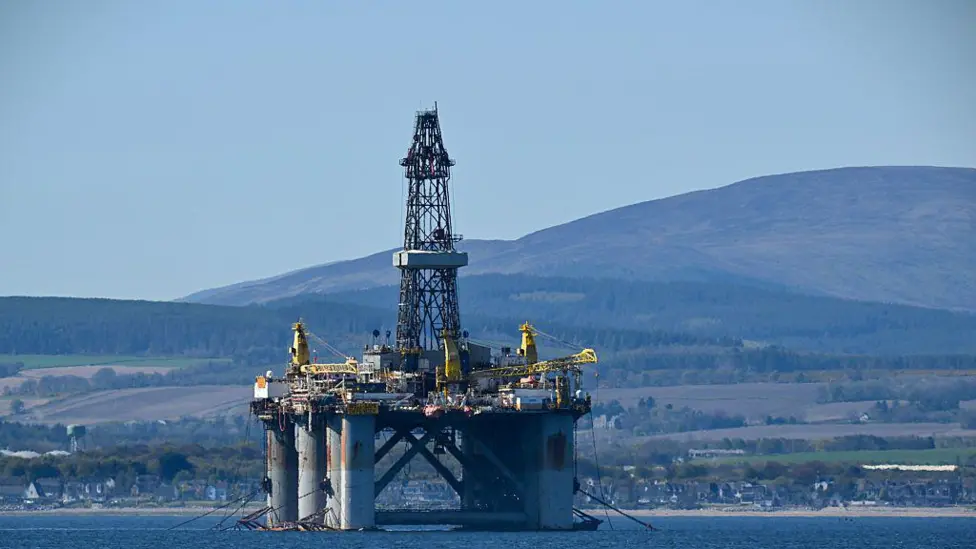
"There is a resource there. When people are struggling - you can't ignore that and hence me indicating that to the president," Burnham said.
The prime minister has faced pressure from trade unions, industry representatives and some Labour MPs to support greater oil and gas production in the North Sea.
However, the issue remains politically sensitive within the Labour Party and has raised questions about the government's climate commitments.
Trump Says North Sea Oil Could Make UK Wealthy
Trump has long advocated increased drilling in the North Sea.
In a social media post published shortly before Burnham became prime minister, Trump claimed that people in Aberdeen were celebrating because the new UK leader had said he would be "opening up, all the way" the North Sea oil industry.
Speaking about his conversation with Burnham this week, Trump said: "He said he's going to open up North Sea oil."
"If he does that, you're going to be a wealthy country," Trump added.
The US president also pointed to Norway's substantial financial reserves, arguing that North Sea resources could provide significant economic benefits.
Burnham has now confirmed that he told Trump during their phone conversation that he intended to take a pragmatic approach to North Sea oil and gas.
However, the government has not yet announced any formal change to its policy.
Labour's Position on New Drilling
Labour's 2024 general election manifesto promised that the party would not issue new licences for oil and gas exploration in the North Sea, while honouring existing licences.
Former energy secretary Ed Miliband was a strong supporter of that position under the previous Labour government.
Miliband, who has previously described the licence for Rosebank oil field as "climate vandalism", is now serving as foreign secretary in Burnham's government.
The government's position has therefore attracted considerable attention, with questions remaining over whether Burnham's comments signal a potential change in policy or simply a willingness to consider existing North Sea resources pragmatically.
Political Pressure Grows
The debate has divided political parties and environmental campaigners.
The Conservatives and Reform UK have called for increased drilling, arguing that domestic production could help reduce energy costs and improve energy security.
Former Conservative leader Kemi Badenoch previously described it as "absurd" for the UK to leave what she called vital resources untapped.
Some Labour MPs, however, have expressed concerns about expanding North Sea drilling.
Rachael Maskell has urged the government to follow climate science, arguing that the UK is facing a climate emergency.
Green Party leader Zack Polanski has also criticised the prospect of additional drilling.
"Our country is burning. Crops are failing. Thousands have been killed by extreme heat," Polanski said.
He argued that allowing new oil and gas drilling could worsen climate change and called on Burnham to commit to leaving fossil fuels in the ground.
The End Fuel Poverty Coalition has also questioned whether increased North Sea production would reduce household energy bills.
Simon Francis, from the organisation, argued that oil and gas produced in the North Sea are sold at global market prices and therefore would not automatically provide cheaper energy for British consumers.
Rosebank and Jackdaw at the Centre of Debate
The future of North Sea drilling has increasingly focused on two major oil fields, Rosebank and Jackdaw, both located off the Scottish coast.
Regulators approved drilling at the sites in 2022 and 2023, but those decisions were subsequently overturned in 2025 following legal challenges.
The legal process remains ongoing, meaning the government will eventually face decisions over whether companies should be allowed to proceed with production in the two areas.
Other oil and gas licences have also been approved in recent years but remain largely undeveloped.
The previous government had already made some concessions to the oil and gas industry, including allowing "tie-back" developments, where production takes place in unlicensed areas connected to existing licensed fields.
Windfall Tax Could Become Part of the Debate
If the Burnham government chooses to encourage additional North Sea drilling, another issue could be the future of the Energy Profits Levy, commonly known as the windfall tax.
The levy was introduced to tax exceptional profits made by energy companies following the surge in energy prices.
Any decision to change or remove the tax could become part of wider efforts to encourage investment in the UK's North Sea oil and gas industry.
For now, Burnham's comments have opened the door to further debate about the future of North Sea energy.
The government faces a difficult balance between energy security, economic pressures, climate commitments and the future of an industry that remains economically significant to parts of Scotland and the wider UK.
Whether Burnham's "pragmatic approach" leads to a significant policy change remains to be seen.

Comments