Lockerbie Bombing Trial Date Set as Judge Warns Against Further Delay


A US judge has set 19 January as the start date for the federal trial of a Libyan man accused of involvement in the bombing of Pan Am Flight 103 over Lockerbie in 1988.
Abu Agila Mas'ud Kheir Al-Marimi, who denies the allegations against him, is accused by US prosecutors of helping to manufacture the bomb that destroyed the aircraft.
Judge Dabney Friedrich warned that she would not tolerate further delays, saying the defendant, the public and the victims had already waited a long time for the proceedings.
The trial had been expected to begin with jury selection in Washington DC in August, but was postponed after prosecutors disclosed new evidence.
The precise nature of that material has not been made public. The court has heard that it involves a single new witness.
What happened over Lockerbie?
Pan Am Flight 103 was travelling from London Heathrow to New York on 21 December 1988 when an explosive device detonated in the aircraft's forward hold.
The aircraft broke apart at approximately 31,000 feet.
All 259 passengers and crew members were killed.
A further 11 people on the ground in Lockerbie died when parts of the aircraft came down over the town.
The victims included 190 US citizens and 43 people from the UK.
The bombing remains the deadliest terrorist attack in British history.
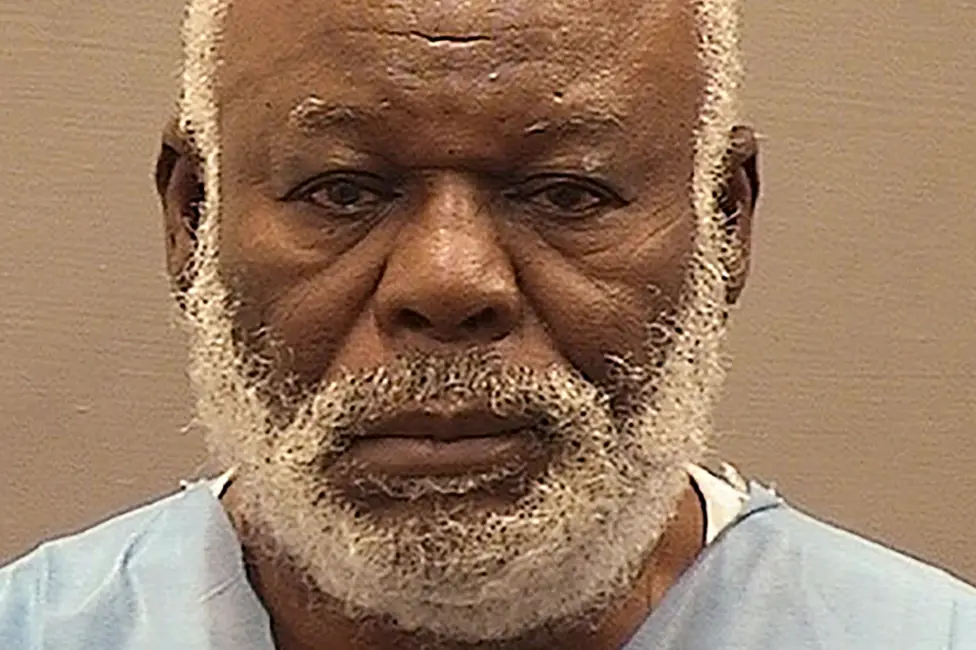
The allegations against Al-Marimi
Al-Marimi, now in his mid-70s, was extradited from Libya to the United States in 2022 and has remained in custody.
He is charged with two federal counts relating to the destruction of an aircraft resulting in death.
If convicted, he could receive a maximum sentence of life imprisonment.
Al-Marimi has denied the charges.
The prosecution alleges that he played a role in making the explosive device used in the attack.
US prosecutors also allege that Al-Marimi made admissions about his alleged involvement while being questioned in a Libyan detention facility in 2012.
His defence disputes the alleged confession and has argued that it was false and obtained under duress.
Judge Friedrich has ruled that the alleged confession is admissible as evidence. Its weight and credibility will ultimately be matters for the court to consider during the trial.
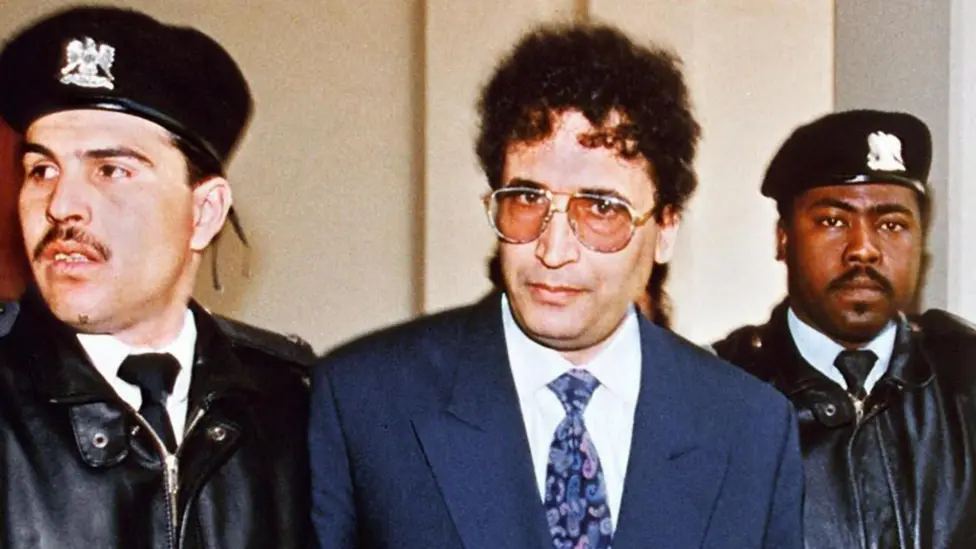
Judge warns against further delays
The latest postponement had caused concern among representatives of victims' families, particularly because many relatives are now elderly.
Judge Friedrich made clear that she expects the case to proceed without further unnecessary delay.
"The defendant and the public and the victims have waited a long time for this trial," she told the court.
The judge's comments underline the unusual circumstances of a prosecution taking place almost four decades after the bombing.
At the same time, the proceedings must still provide the defendant with the full protections of the US criminal justice system.
The prosecution will have to prove the charges beyond a reasonable doubt.
Al-Marimi remains presumed innocent unless and until he is convicted.
The earlier Lockerbie prosecution
The forthcoming US case follows an earlier prosecution involving two other Libyan nationals.
In 2000, the pair were tried before a Scottish court sitting at Camp Zeist in the Netherlands.
After an eight-month trial, the court found that the bombing had been carried out by members of the Libyan intelligence service.
Abdelbaset al-Megrahi was convicted of the murders and sentenced to life imprisonment.
The second accused, Al Amin Khalifah Fhimah, was acquitted.
Megrahi's conviction was subsequently challenged through the Scottish appeal process.
The Scottish Criminal Cases Review Commission referred his case to the appeal court on two occasions, but his conviction was ultimately upheld.
Megrahi was later released from prison on compassionate grounds after being diagnosed with terminal cancer. He died in Libya in 2012.
The earlier proceedings and conviction form part of the historical background to the current prosecution, but they do not determine whether Al-Marimi is guilty of the charges now before the US court.
The alleged confession
The prosecution's case concerning Al-Marimi's alleged confession is expected to be closely examined at trial.
US authorities say he admitted involvement in the bombing during questioning in Libya in 2012.
The alleged confession was subsequently provided to Scottish investigators in 2017.
Al-Marimi's legal team disputes the prosecution's account and says the statement was obtained under duress.
The judge's decision that the evidence can be admitted does not mean that the allegation has been proved.
The prosecution will still have to establish the reliability and significance of the evidence and persuade the court that the charges have been proved beyond a reasonable doubt.
Why the case matters
The Lockerbie bombing has had consequences stretching far beyond the original criminal investigation.
For the families of those killed, the events of 21 December 1988 remain a defining loss.
Many relatives have spent decades seeking answers about the attack and those alleged to have been responsible.
The prosecution of Al-Marimi represents a further attempt by US authorities to establish criminal accountability in relation to the bombing.
But the trial must ultimately be decided on the evidence presented in court.
Almost 40 years of waiting
The passage of time is one of the most striking aspects of the case.
People who were adults when Pan Am Flight 103 was destroyed are now elderly.
Some relatives who spent decades seeking answers have died without seeing this latest prosecution reach trial.
That reality explains the significance of the judge's warning about further delays.
However, the age of the case does not reduce the defendant's right to a fair trial.
The court must balance the legitimate interests of victims and their families with the fundamental requirement that the prosecution prove its case according to the applicable legal standard.
The trial ahead
Unless there is a further change to the timetable, proceedings against Abu Agila Mas'ud Kheir Al-Marimi are due to begin in Washington DC on 19 January.
The case will put the prosecution's allegations to the test before a US court.
The outcome cannot be predicted.
Al-Marimi denies the charges and remains presumed innocent.
For the families of the 270 people who died, however, the scheduled trial date marks another significant moment in a case that has remained unresolved for generations.
After almost four decades, the allegations will once again be tested through the evidence and arguments presented in court.
The next chapter of the Lockerbie legal story is now scheduled to begin.



Comments