Lib Dem MP Resigns from Frontbench and Calls for Change in Leadership

Liberal Democrat MP Charlie Maynard has resigned from his frontbench role and is calling for Sir Ed Davey to be replaced as party leader. The move adds to questions about the party’s direction following its record-breaking result at the 2024 general election, although the party’s deputy leader insists the vast majority of MPs continue to support Davey.
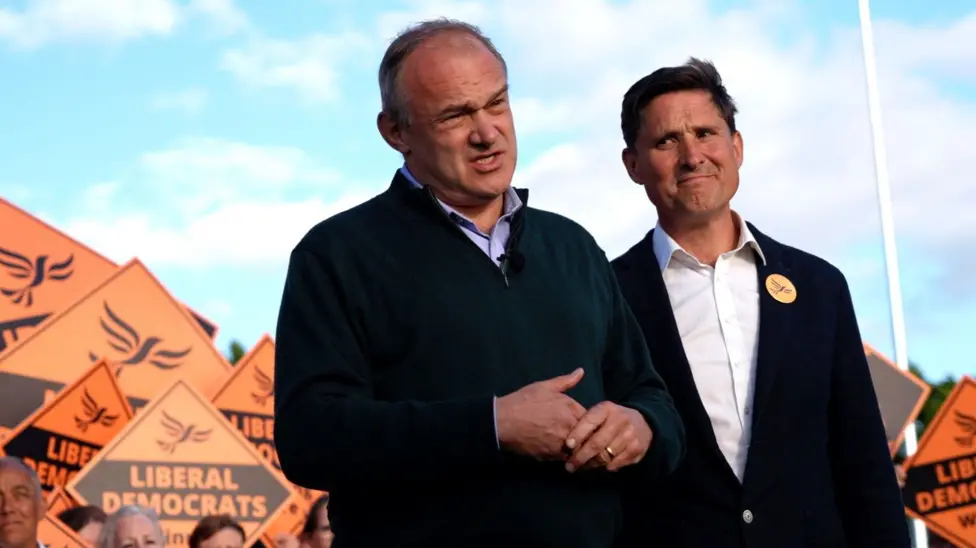
Charlie Maynard Steps Down
Charlie Maynard, the Liberal Democrat MP for Witney in Oxfordshire, resigned as the party’s Treasury spokesperson on Friday, 9 October 2026.
Maynard, who was first elected in 2024, is understood to want a change of leadership, putting him among a small group of MPs reported to be unhappy with Sir Ed Davey’s leadership.
The departure represents another setback for the party’s frontbench, following the resignation earlier in the week of Alison Bennett, who had served as spokesperson for care and carers.
Bennett did not publicly confirm her reasons for leaving the role. It is understood, however, that her decision was not related to personal reasons.
Maynard won the traditionally Conservative Witney constituency in the 2024 general election with a majority of more than 4,000. The seat had previously been represented by former Conservative Prime Minister David Cameron.
Before entering Parliament, Maynard ran an international mergers and acquisitions advisory firm.
Party Leadership Under Scrutiny
Sir Ed Davey has led the Liberal Democrats for six years. Under his leadership, the party achieved its strongest general election result in 2024, winning 72 seats.
Despite that success, the Liberal Democrats have struggled to build significantly on their electoral breakthrough, with opinion polling remaining relatively low.
Deputy leader Daisy Cooper has defended Davey, saying:
“The vast majority of our MPs support Ed, want him to lead the party into the next election, and are furious at this distraction.”
The party has been approached for further comment from Maynard.
Although there is understood to be a small group of MPs dissatisfied with Davey’s leadership, there is no indication that a formal leadership contest has been triggered.
Disagreement Over the State Pension Triple Lock
Recent tensions have also centred on the state pension triple lock, which ensures the basic state pension and new state pension rise annually in line with the highest of three measures: inflation, average earnings growth or 2.5%.
Last week, Davey criticised Andy Burnham’s announcement that he would adjust the triple lock, arguing that the proposal would risk pushing more pensioners into poverty.
Davey also raised concerns about the long-term retirement prospects of younger generations, saying that changes could leave millennials with a very poor pension when they retire.
However, his comments drew criticism from some within his own party. One Liberal Democrat MP reportedly dismissed his argument as “nonsense”, while another questioned whether millennials believed the state pension would still exist by the time they reached retirement.
The disagreement highlights differing views within the party over how best to protect pensioners while addressing the long-term sustainability of retirement provision.
Could There Be a Leadership Contest?
The Liberal Democrats have established rules governing challenges to the party leadership.
A leadership contest can be triggered if a vote of no confidence in the leader is passed by a majority of all Liberal Democrat MPs.
To enter a contest, a candidate must secure nominations from at least 10% of the parliamentary party, excluding the candidate themselves, and receive the backing of 200 party members across at least 20 local parties.
Maynard’s resignation and reported call for a new leader do not, by themselves, trigger that process. Any formal challenge would need to meet the party’s requirements.
Wider Questions About the Party’s Direction
Questions about Davey’s leadership have surfaced beyond Westminster.
Last month, Julian Brazil, the Liberal Democrat council leader in Devon, warned that the party was “sleepwalking into irrelevance” and questioned whether Davey was the right person to lead it.
The party now faces the challenge of maintaining unity while seeking to convert its 2024 electoral success into sustained support.
For Davey, the immediate issue is whether dissatisfaction remains confined to a small number of MPs or develops into a broader challenge to his position.
The Daily Round-Up Says
Charlie Maynard’s resignation raises questions about the Liberal Democrats’ internal unity and the direction of the party under Sir Ed Davey. However, it is important to distinguish between calls for a change of leader and an actual leadership challenge: no formal contest has been triggered by Maynard’s departure alone.
Davey can point to the party’s historic result in 2024, when the Liberal Democrats won 72 seats. Yet electoral success does not necessarily guarantee lasting momentum, and recent disagreements over pensions suggest there are differences within the party about policy and political priorities.
The coming weeks may reveal whether this is an isolated dispute or the beginning of a more substantial debate about the party’s leadership and future strategy.
Comments