Football Shirts Made for Less Than £1 an Hour in Cambodian Factories

Official football shirts worn by fans of some of the world's biggest clubs are being produced by workers in Cambodia whose basic pay can amount to less than £1 an hour, a BBC Sport investigation has found.
The investigation traced authentic replica shirts for clubs including Arsenal, Celtic, Liverpool and Real Madrid to two factories in Cambodia.
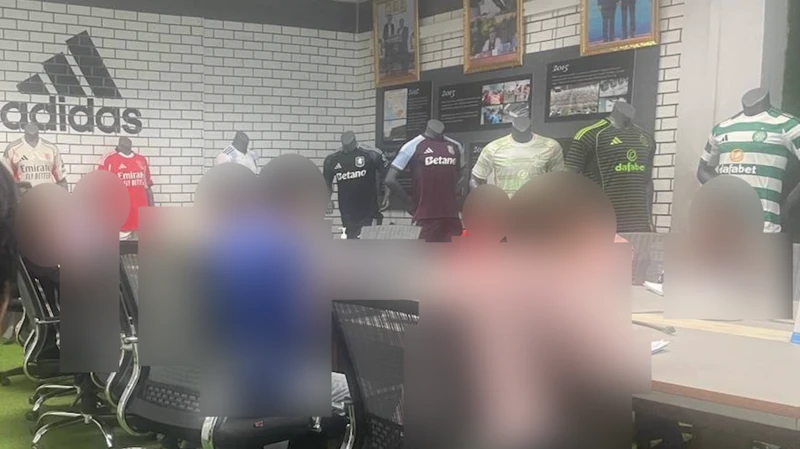
Workers at the factories described difficult conditions, including temperatures above 35C, pressure to meet production targets, verbal abuse when targets were missed and concerns about electrical safety.
The findings have raised fresh questions about the gap between the prices football fans pay for official shirts and the wages received by the people who make them.
Inside Cambodia's football shirt factories
BBC Sport traced production to Bowker Garment Factory and Trax Apparel, both in Cambodia.
Around 3,400 people work at Bowker, while another 3,200 are employed at Trax.
Most of the workforce is made up of women.
The factories carry out much of the production process, including sewing, ironing and packaging, with fabric imported from neighbouring Thailand and Vietnam.
Production begins months before new football kits are officially unveiled to supporters.
Photographs obtained by BBC Sport showed football shirts and production lines linked to major international clubs and sportswear brands.
Workers earning basic wages below £1 an hour
Five payslips examined by BBC Sport showed basic monthly salaries of between $210 and $220, equivalent to around £158 to £166.
Workers typically work six eight-hour shifts each week.
Overtime and allowances can increase total monthly earnings. Three of the payslips examined showed earnings of around $300 (£226) a month, although those figures involved significant additional hours.
One worker told the BBC that it was difficult to live on the money after paying for rent, food and utilities.
Another said international customers should understand the difference between the price of a shirt and the salary received by the person making it.
The worker said every shirt contained "the sweat of Cambodian workers."
Trax said its average monthly employee earnings this year were between $305 and $342 (£230-£258).
Adidas said average net wages across a sample of its Cambodian suppliers were 34% above the Anker Research Institute's living-wage benchmark.
The company also said workers were generally paid considerably more than Cambodia's minimum wage.
Temperatures above 35C
Heat was another concern raised by workers.
A photograph taken inside Bowker showed a thermometer reading 35.2C, with humidity recorded at 57.6%.
One employee working on the ironing line said the heat was affecting workers' health.
Workers also described production targets ranging from 300 to 700 items a day, depending on the production line and order.
One worker said employees could face verbal abuse when quotas were not reached, including being shouted at and told to resign.
Another worker said they had received two electric shocks from an exposed wire and claimed action was only taken after the second incident.
These accounts were provided anonymously to BBC Sport and supported by documentary evidence obtained during the investigation.
Adidas responds to the allegations
Adidas does not own either factory but identifies both as primary suppliers subject to its workplace standards.
The company said it had worked for more than 25 years to promote fair and safe working conditions throughout its supply chain.
Adidas said it carries out around 1,200 factory audits every year, reviewing supplier conduct and working with factories to address problems.
The company said both factories had measures in place to manage heat and that its standards did not permit harassment.
It also said no electrical-related accidents had been identified in Bowker's records.
Trax acknowledged periods of elevated temperatures but said cooling systems were in place.
The company also rejected the suggestion that its approach was based on enforcing output targets.
Bowker did not respond to BBC Sport's request for comment.
A wider problem in Cambodia's garment industry
The concerns raised by workers are not unique to football shirt production.
A 2024 International Labour Organization report found widespread problems with heat and worker protection across Cambodia's garment sector.
The report found that 69% of factories had issues relating to heat, while 84% had problems involving worker protection.
The findings therefore raise broader questions about working conditions in one of the world's major garment-producing industries.
For football fans, however, the investigation brings those issues directly into the supply chain behind shirts carrying some of the sport's most recognisable names.
£85 shirts and the cost of football
The investigation comes as supporters increasingly complain about the price of official football shirts.
An adult replica Premier League shirt now costs significantly more than it did a decade ago, with the average price having risen by 50.7% over that period.
Arsenal's standard replica shirts sell for around £85, while versions matching the specification worn by players can cost as much as £120.
One Aston Villa supporter told BBC Sport he had paid £95 for his shirt, including a Champions League badge.
Another supporter described the cost of buying shirts for children as increasingly difficult for families.
The price difference between a shirt's retail cost and the wages paid to workers making it has therefore become a significant part of the debate.
Where does the money go?
Research published by BBC Sport last year estimated that, from a typical £85 football shirt, around:
£8.50 covers fabric, sewing and shipping
£37.45 goes to the retailer
£16.25 goes to the manufacturer
£9.50 is spent on marketing
£13.60 is paid in VAT
The figures demonstrate that the retail price of a shirt is divided between a number of different parts of the supply chain.
Former Puma and Umbro kit designer Rob Warner has previously argued that shirt pricing is complicated by rising costs associated with elite club kit deals and the financial risks taken by retailers.
That means the retail price cannot simply be treated as the amount available to pay factory workers.
But the investigation nevertheless raises questions about how much of the enormous commercial value generated by football ultimately reaches the people producing the merchandise.
The counterfeit shirt problem
The rising price of official shirts has also contributed to demand for cheaper counterfeit products.
Counterfeit shirts can be sold for as little as £12, compared with £85 or more for official versions.
Many fake shirts originate in China.
Police and Trading Standards organisations have warned that counterfeit goods can be produced without the same regard for safety, workers' rights or other standards expected from legitimate manufacturers.
That creates a difficult situation for supporters.
Fans are encouraged to buy official merchandise to support clubs and avoid counterfeit products, but the price of official shirts can put them beyond the reach of some families.
Who is responsible for the supply chain?
The Premier League expects clubs to carry out appropriate due diligence on kit manufacturers and supply chains.
Adidas supplies eight of the 20 Premier League clubs, as well as the national teams of Scotland and Northern Ireland.
Nike supplies three Premier League clubs and the England national team.
Hummel also supplies three Premier League sides.
The clubs named in the BBC Sport investigation did not respond to requests for comment.
That leaves an important question for football's governing bodies, clubs and sportswear companies:
How much responsibility should the organisations whose names appear on these shirts have for the conditions in which those shirts are produced?
'Respect has got to be a baseline'
Workers' rights campaigners say the issue should not be separated from football's wider commitment to social responsibility.
Anna Bryher, from UK campaign group Labour Behind the Label, said "respect has got to be a baseline in sport" and argued that clubs should make clear that they will not put their names on products where workers are not treated with respect.
The Clean Clothes Campaign also described the findings as a "very grim picture", while stressing that low pay and difficult working conditions affect garment workers across Cambodia.
The investigation does not establish that every football shirt produced in Cambodia is made under the same conditions.
It does, however, provide a detailed look at conditions reported by workers in two factories connected to major sportswear supply chains.
The real cost of the shirt
For supporters, buying a football shirt can be about far more than clothing.
It can represent a club, a player, a childhood memory or a family's connection to the game.
But behind the branding and stadium lights is a global supply chain involving thousands of workers.
The question raised by this investigation is whether the people at the beginning of that supply chain are receiving a fair share of the enormous commercial value generated by football.
Adidas says it audits suppliers and has measures designed to protect workers.
The factories dispute some of the allegations or say measures are already in place.
Workers interviewed by BBC Sport, however, describe a very different experience.
For the football industry, the challenge is now not simply selling more shirts — but demonstrating that the people who make them are treated with the same respect that the sport demands on the pitch.


Comments