Disgraced Former Television Newsreader Huw Edwards' Poetry Competition Entry Sparks Outrage and Raises Serious Questions About Accountability

Disgraced former television newsreader Huw Edwards has faced renewed criticism after entering a poetry competition at Wales' largest cultural festival, with a survivor of child sexual abuse warning that his participation could have caused profound distress to victims.

This controversy is not simply about a poem.
It is about accountability.
It is about responsibility.
And it is about whether society is too quick to move on when someone convicted of serious offences attempts to rebuild their public life.
In 2024, Edwards admitted accessing 41 indecent images of children, including seven images classified in the most serious category. He received a six-month prison sentence, suspended for two years, and was placed on the sex offenders' register for seven years.
These were not abstract crimes.
Behind every image of child sexual abuse is a real child who has been exploited and abused.
The harm does not disappear simply because the image is viewed on a screen. The existence and circulation of such material are part of a wider system of exploitation that causes devastating and lasting harm to children.
That is why the language used to describe these offences matters.
And that is why survivors have every right to question how, and how quickly, someone convicted of such offences returns to public life.
'It would have been catastrophic if he had won'
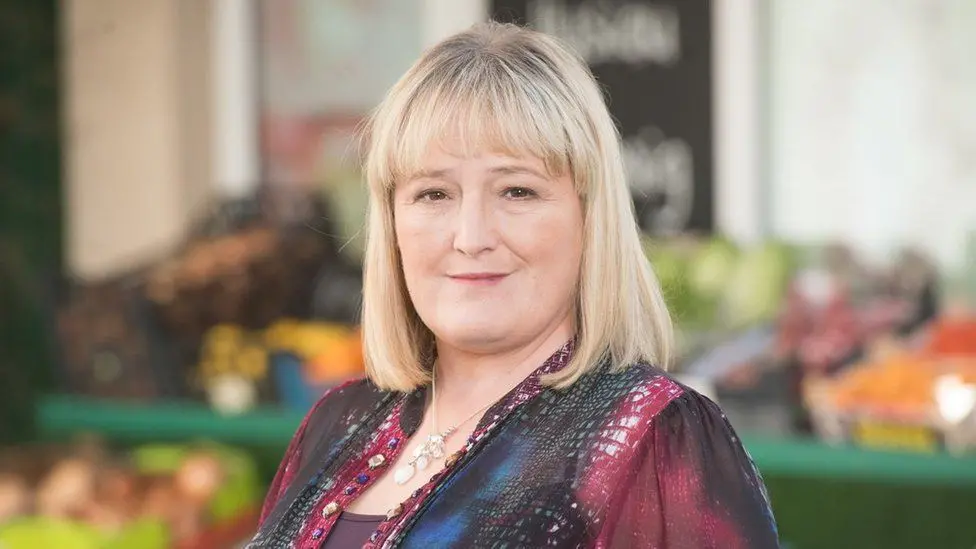
Actress Sera Cracroft, who has spoken publicly about her own experience of child sexual abuse, has criticised Edwards' decision to enter the National Eisteddfod poetry competition.
She said it would have been "catastrophic" if he had won and been publicly crowned in front of the nation.
Her concerns should not be dismissed.
Survivors of child sexual abuse can spend years, sometimes their entire lives, dealing with the emotional consequences of what happened to them.
For many, the trauma does not end when a perpetrator is convicted.
It does not end when a sentence is handed down.
And it certainly does not end when the media moves on to the next story.
When someone convicted of a serious offence involving child sexual abuse material attempts to return to a high-profile public environment, survivors are entitled to ask difficult questions.
Edwards has the right to seek rehabilitation.
He has the right to engage in creative work.
But those rights do not mean that survivors must remain silent.
This is not about banning poetry
The debate should not be reduced to an argument about whether Edwards is allowed to write poetry.
Of course he is.
The real question is whether there is a difference between rehabilitation and public recognition.
There is.
A person can seek to rebuild their life without expecting public admiration.
They can work on themselves without demanding that others forget what happened.
They can seek treatment without attacking those who remain deeply affected by their actions.
The National Eisteddfod is one of Wales' most important cultural institutions. It represents the language, culture and identity of a nation.
For a survivor, the prospect of seeing someone convicted of accessing child sexual abuse material publicly crowned at such an event could understandably be deeply upsetting.
That is why the issue cannot simply be dismissed as an attack on artistic expression.
It is about the impact that public recognition can have on those who have already suffered.
Edwards' response
Edwards has said his poem was a tribute to his father and claimed it was intended to correct what he described as a "poisonous narrative".
But his response to criticism has itself raised questions.
He attacked his critics and described them as "sickeningly self-righteous", while also directing criticism towards Sera Cracroft.
That approach is difficult to understand.
When survivors speak about the impact that serious offences can have on them, the response should be to listen.
It should not be to attack them.
Anyone seeking rehabilitation must understand that accountability involves more than serving a sentence.
It involves recognising the consequences of your actions.
It involves understanding the pain caused.
And it involves accepting that other people may not be ready to forgive, forget or move on simply because you want them to.
The problem with public redemption
There is an important distinction between rehabilitation and redemption.
Rehabilitation is about helping an individual address their behaviour and preventing further offending.
Redemption is different.
Redemption cannot be demanded.
It cannot be forced upon victims.
And it cannot be achieved simply by attempting to control the public narrative.
For survivors, the consequences of child sexual abuse can last a lifetime.
The fact that a court case has ended does not mean the trauma has ended.
The fact that someone has served a sentence does not mean survivors have to stop speaking.
And the fact that someone wants to rebuild their reputation does not mean the public is obliged to forget.
Should the rules be reviewed?
The National Eisteddfod's poetry competition operates under a system of anonymity.
Entrants compete using pseudonyms, with their identities kept confidential until the results are announced.
The system is designed to ensure that poems are judged on their artistic merit rather than the reputation of the writer.
The Eisteddfod has said that nobody, including the judges, knows beforehand who has entered.
That may explain how Edwards was able to participate.
But it does not end the debate.
The organisation now has an opportunity to consider whether its rules and safeguarding procedures are sufficient.
This is not about preventing people from participating in cultural life simply because they have a criminal record.
It is about asking whether there should be safeguards when individuals convicted of particularly serious offences could potentially receive public recognition at major national events.
That is a legitimate conversation.
The Real Terryo View
The Real Terryo Daily Round Up believes this controversy raises questions that cannot, and should not, be brushed aside.
This is not simply a story about a poem or a poetry competition.
It is about accountability.
It is about responsibility.
It is about the voices of survivors who continue to live with the consequences of abuse long after the headlines have disappeared.
And it is about whether society is too quick to move on when those convicted of serious offences seek to rebuild their public lives.
People can change.
People can seek help.
People can be rehabilitated.
But rehabilitation must never come at the expense of those who were harmed.
For survivors, the past is not something that can simply be left behind because a court case has ended or a sentence has been served.
The emotional scars can remain for years — sometimes for a lifetime.
That is why the National Eisteddfod should carefully consider whether its rules need to change.
Anonymity may protect the integrity of a competition, but institutions must also consider the wider impact when someone with a serious conviction could potentially be publicly celebrated on one of Wales' most important cultural stages.
Most importantly, anyone seeking to rebuild their life after a serious offence must understand that rehabilitation is not about controlling the narrative or demanding that the public forget.
It is about accountability.
It is about humility.
It is about listening.
And it is about accepting that survivors have every right to speak about the pain and fear they continue to carry.
If someone genuinely wants to move forward, the first step should not be anger towards those who question them.
It should be an understanding of why those questions are being asked.
Survivors should never be expected to remain silent so that someone else can feel comfortable.
They should never be treated as an obstacle to another person's redemption.
Their voices matter.
Their experiences matter.
Their pain matters.
And their right to be heard must come before anyone's desire to rewrite the past.
**Because accountability does not end when a sentence ends.
For survivors, the consequences of abuse can last a lifetime.
And no poem, no competition and no public rehabilitation can ever erase that reality.**



Comments